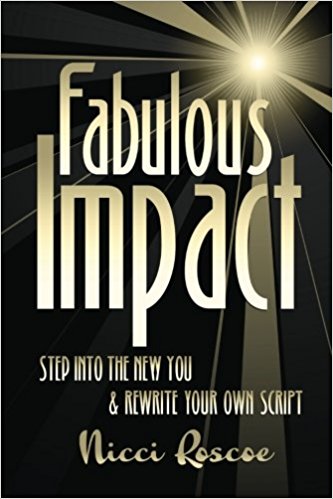
Grant Leboff: In the book, one of the things you talk about - it comes up a few times - is about the importance of Goal Setting. How important do you think setting is for someone?
Nicci Roscoe: I think it's so important to have a goal that you really want to achieve, because then it's something that you can reach out for, and every day you've got a wonderful challenge that you could be excited about. So I think in business, in particular with business leaders, everybody has a challenge at some point in the day, or in that week, or there month, to get out there and make sure that something happens.
Grant Leboff: And you talk about something that I think is quite interesting, is the importance of making lists. So how does that fit in with setting setting goals.
Nicci Roscoe: I've always liked to make lists. My mother always made lists, she'd say make your list otherwise you'll forget what you're going to do. So it's not just about remembering what you're going to do, it is making those lists so you have those goals and if you think about, what is it that's really important to me, what is the I really want to achieve? You have your 'A' list, your 'B' list, and your 'C' list. The 'A' list is what is the most important thing to you, and you want to achieve it that day or even that week. That is what is going to happen. So it could be five things. It could be three things. Whatever it is, they are the most important things to you.
Then you have you'll have your 'B' list, and it's like...well they're important but they're not quite as important as the 'A' list. So you put them on. So when you've achieved to a nest you then go to the B list. Then you have your C list, they are like, well yeah, OK, I really want to do that, I need to have a meeting with X Y or Zed. However that's not as important as 'A' because I want to make this happen. I want to wind up this deal. So that is exactly what I'm going to put on my list right now. Then I'll allow 'C' to slowly creep up to 'B' and then 'B' will then eventually be 'A'.
Grant Leboff: How often should someone revisit some of these goals? Is it a daily exercise, is it a weekly exercise?
Nicci Roscoe: Daily exercise, like you have your diary, you have that as part of your diary. So you look that it it every morning. You're going to be very busy every morning because, in the mornings you need to think about what it is you want to achieve, how you're going to achieve it that day, look at your diary and make sure that the 'A' list is what you're going to do. So that by the end of the day, you know you've done it and you can take that off. If you haven't, then you keep that on for the next day.
Nicci Roscoe: Do you review it at the end of the day? Is there a review process at the end of the day.
Grant Leboff: You review it at the end of the day. By the time work finishes, or by the time you're going home, whatever that is, have a look at it or even when you get home, just spend five minutes looking at your diary, looking at what it is, the goal that you set for you to do that day. It's so important to have something there, in place, that you know, right. That is what I'm going to use as my guide. I'm going to make this happen.
There may be small changes to the spoken word in this transcript in order make it more readable.